Welcome to Episode 133 of Ramping Up your English! We’re still in South America, telling stories about Native Americans and more.
Watching Episode 133
In this episode of Ramping Up your English, we continue learning about Native Americans in South America and about all the changes the continent has gone through over time. In Part 2 of this work, we focus on Brazil and Paraguay.
Click here to watch Episode 133 of Ramping Up your English.
Episode Summary
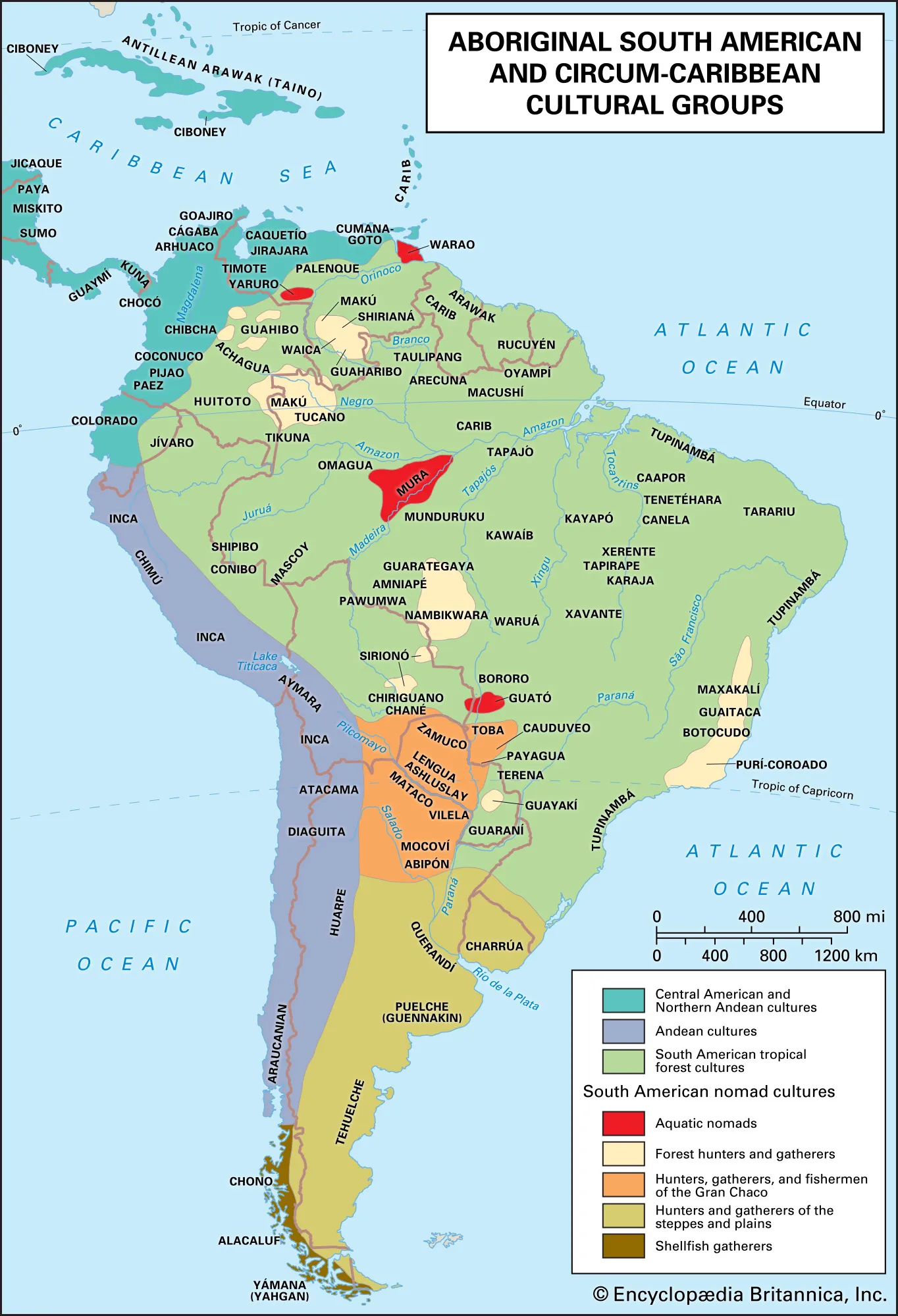
The Marajora lived at the mouth of the Amazon River, a vast distributary taking water from the basin that dominates the continent. This region has cave paintings dating back thousands of years. The Tupi and the Tapulla people lined the Atlantic Coast where Portuguese explorers made contact and began settling on the edge of what would become Brazil. Some of these groups were speakers of Guarani.
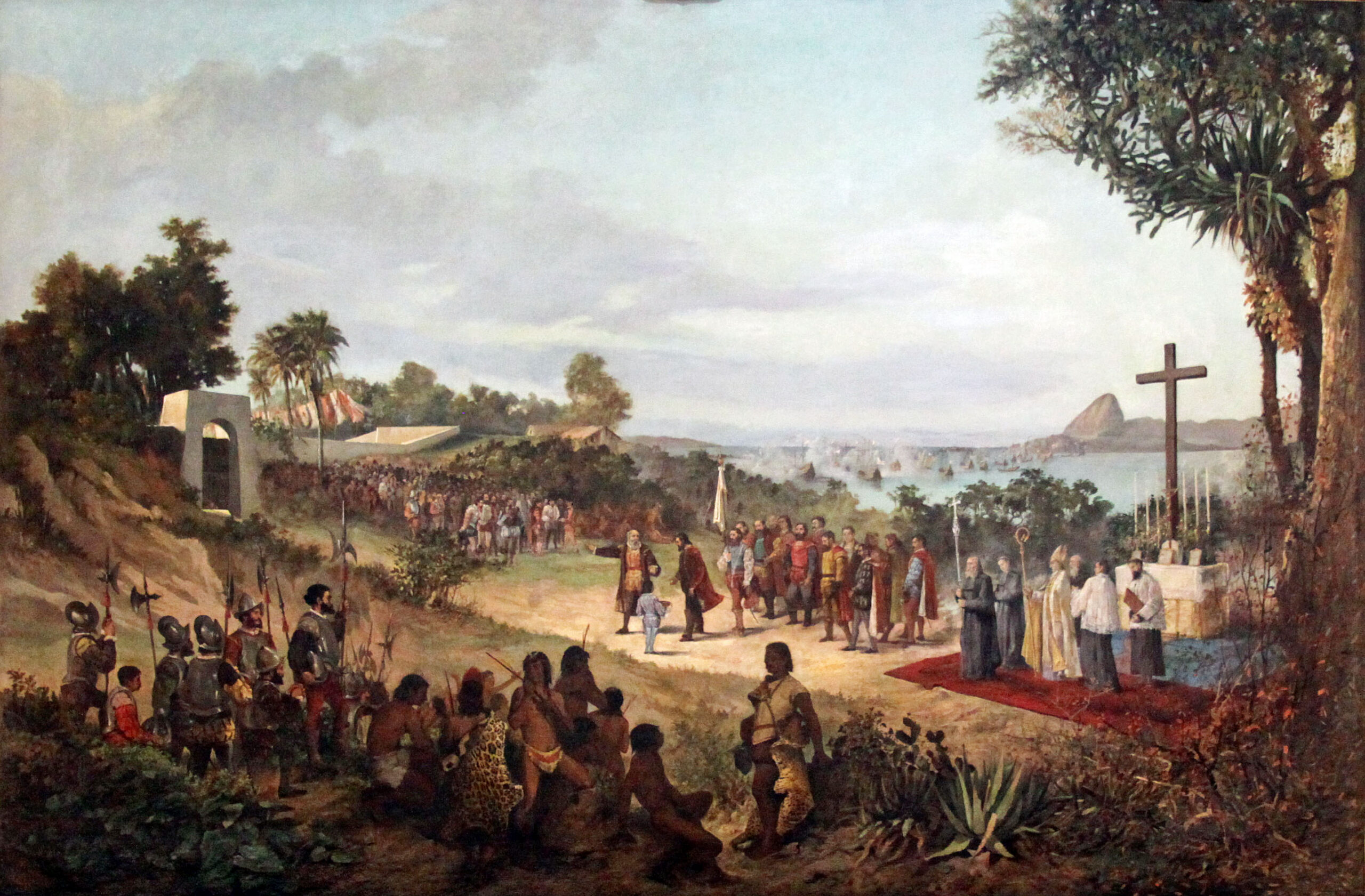
Settlements were established in this region as great numbers of Native Americans died from European diseases. This weakened the survivors to point where they were reduced to slavery by the growing Portuguese population. They labored as slaves in the sugarcane fields. The settlement of Rio de Janiero, was chosen as capital by the Portuguese royal court as they fled troubled Europe enmass and set up the Portuguese thrown In Brazil. (Guess who’s coming to dinner.)
Sao Paulo’s development was much slower until it became the jumping-off place for gold seekers and slave raiders, even as slaves from Africa arrived in the millions. Sao Paulo’s Population exploded, becoming the most populous city in South America. Those who pushed westward extended control over unclaimed areas, extending Brazil’s territory, and making it the largest country on the continent.
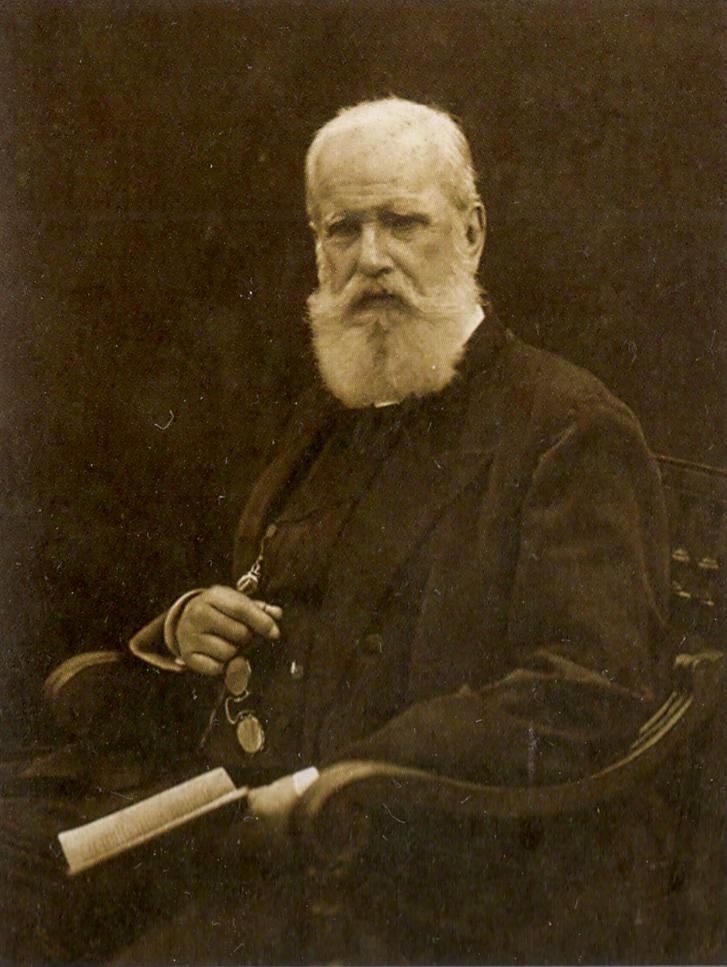
The royal court returned to Europe after Napoleon was brought under control, leaving Pedro I as the Regent of the Kingdom of Brazil. His son, Pedro II ascended to the thrown after his father returned to Europe. Pedro II sided with Brazilians in breaking away from Portugal and he presided over the most stable reign in Brazilian history.
During his reign, Brazil fought against Paraguay in the War of the Triple Alliance. It was the bloodiest war yet in the Americas. It was all about disputed territory, and Paraguay lost much of its territory and people in that war.
The Brazilian Republic was proclaimed in 1893, yet the government lurched between dictatorships, military takeovers, mutinies, and other turmoil. There were also elections, and the winner of the 1955 election moved the Brazilian capital from Rio de Janeiro inland to Brasilia. It took 40 months to build this new city, and it became the capital as planned.
All this progress was interrupted by by a military coup in 1964, ushering in a reign of terror, targeting students, teachers, lawyers and journalists. Even a former president was murdered by the military.
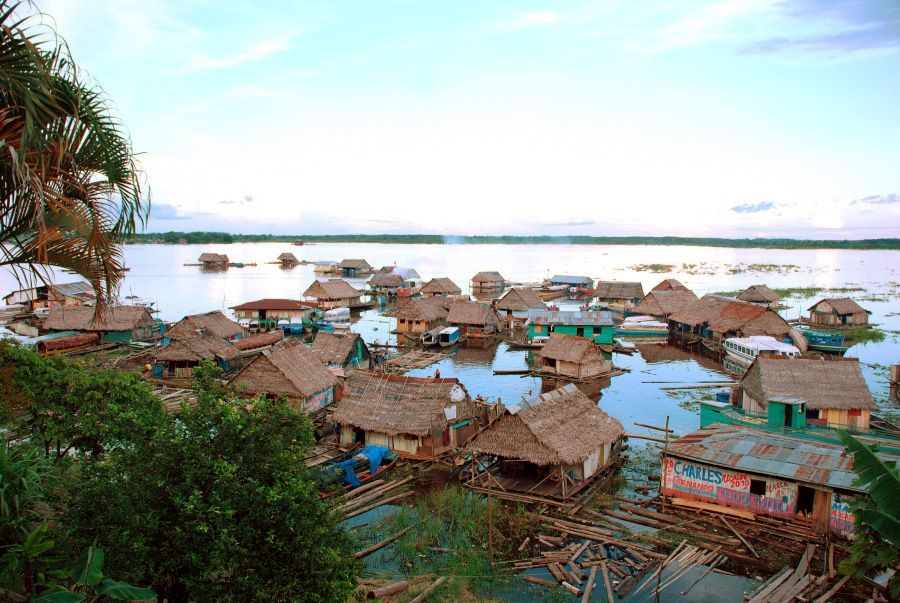
In terms of Native Americans in Brazil, many assimilated as mixed-blood families. Those who resisted assimilation struggle to retain their identity and their rights, but some groups of indigenous people are standing up to repression and violence, demanding their rights. The Amazon region still contains some indigenous people who have never been contacted. Brazilian law provides protection, but some politicians are lax on enforcement.
The Amazon Rain Forest has been called the “lungs of the Earth,” but protection was scaled back during the administration of President Bolsonaro. Current President Lula de Silva is expected to reinstate that protection.
Rio de Janeiro, Sao Paulo, and Brasilia are thriving prosperous cities with gleaming office towers and cultural venues. Nonetheless, this prosperity excludes a considerable portion of the population, and state violence is still a reality in Brazil.
Language Work
This episode includes the same assignment for reinforcing English comprehension as the previous episode. Below is that assignment and a few sample questions.
Most of this episode is the featured video, but some language work will bring the greatest benefit to English Learners. We’re asking viewers to watch the video, then write questions based on the content of the video.
When I was a news reporter, I was aware that each story had to address the questions of Who, What, Where, When, How, and Why. We worked with these interrogatives before, but now we go deeper, demanding greater comprehension of this English video.
Start with the question containing the interrogative “Who.” The answer will be a person of group of people. So you’re finding the answer first, then writing a fair question – already knowing the answer. An example might be, “Who drew mysterious figures in the desert that could only be seen from a high elevation?” (Watch the video for the answer, yet your work is not to answer questions; rather to write them.) The above in just an example.
The interrogative “what” can be used in many ways. It can refer to objects, but also to events. An example might be: “What did the structures of the Chico Norte civilization lack that were common in later cities of the region?” So using “what” could relate to objects (things that were lacking) or events that are related in the video. I suggest at least three questions using “what.”
The question beginning with “where” refers to a location. The video describes locations and shows them on a map, so this may be easy for you to write. You could probably write three of these without much struggle. The interrogative “when” is also pretty straight-forward. It’s the time when something happens or exists. There are lots of references to temporal content in the video. Be aware that you may need to use the word “did” in your question, as, “When did the Inca overtake the chimu resistance.
The helping word “did” will also help with the earlier questions. The next interrogative is “how.” This can refer to the means by which something is done. An example is: How did the Chimu respond to kingdoms that didn’t want to become part of their empire? The word “how” can be combined with the words “much” and “many” to show quantity. How many years did the Moche civilization endure? This could be a tough one. A single question would be fine, unless you want to come up with more.
The question “why“is a matter of Cause and Effect, and may take some conjecture on your part. Why did the structures of Chico Norte have no defensive features? One of these questions using “why” should be enough unless you really want to do more.
Featured Video
The video featured in this episode is the second part of South America, with a focus on Brazil and Paraguay. Click here to enjoy this video.
Next Episode
Episode 134 is in production now, and will soon be available, along with the episode 134 page. Please visit soon to enjoy the next episode of Ramping Up your English.